Free Shipping
For all orders over $50
New customers save 50% with code FREE50FIRST Discount Code
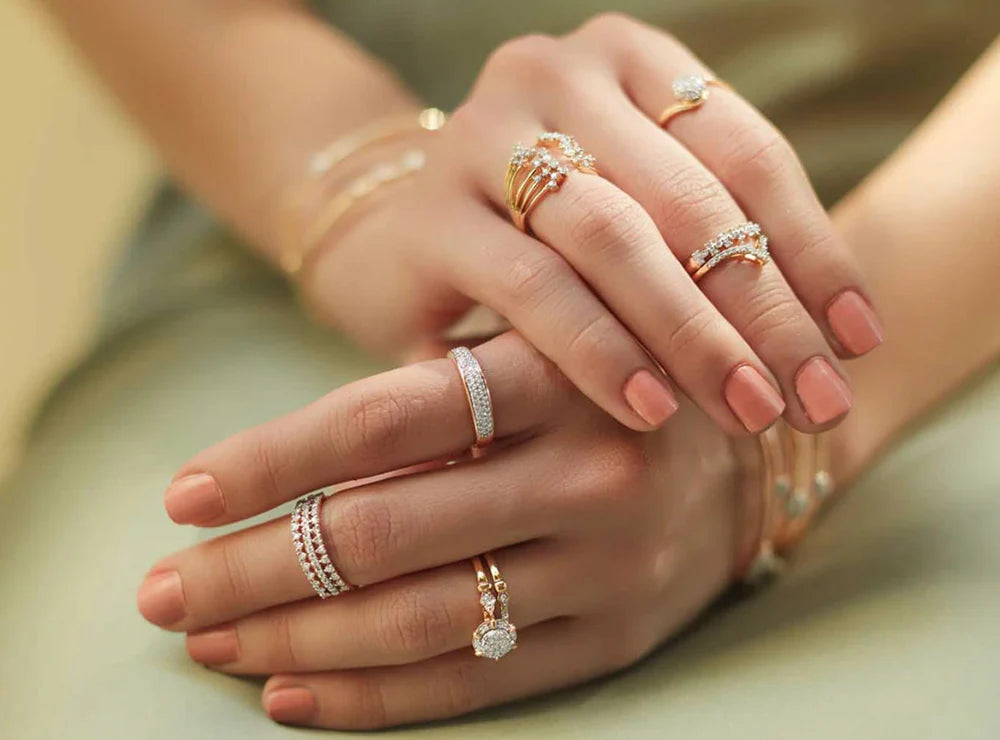


Figuring out how to measure ring size sounds simple until you actually try to do it. Suddenly there are charts, strings, rulers, and doubts about whether your fingers are betraying you. This guide slows things down and walks through it like a normal conversation.
Ring sizing doesn’t arrive with certainty. It settles in through small checks—one measurement here, another later in the day. And then, without realizing when it happened, you end up with a size that fits your real life, not just a chart.
When someone asks how to measure ring size, they usually picture a number on a chart. But ring sizing is less about the chart and more about the body wearing it. The “right size” is the one that respects swelling, temperature shifts, and daily movement. It’s not about forcing a perfect circle onto a finger. It’s about finding a fit that stays comfortable across the hours you actually live.

Ring sizing isn’t just about numbers. Fingers swell. They shrink. Temperature, time of day, even hydration plays a role. That’s why two people with similar hands might wear different sizes comfortably. A ring that fits perfectly in the morning can feel tight by evening. This isn’t user error. It’s biology. Understanding that early prevents frustration later, especially if the ring is meant to be worn daily.
Before you even try to measure ring size, it helps to know that not all countries speak the same sizing language. The US, UK, Canada, and Australia use different systems, even though they often overlap.
A US size 7 doesn’t translate cleanly into a UK size without a conversion. That’s where a reliable ring size guide matters. Otherwise, what feels “close enough” can end up uncomfortable long term.
The biggest mistake isn’t measuring wrong. It’s measuring once and trusting it blindly. Fingers change slightly throughout the day, especially if you’re active or it’s warm.
Another common slip is measuring a finger that’s cold. Cold fingers shrink. That measurement will almost always result in a ring that feels tight later. Timing matters more than people realize.
You don’t need a professional kit to get started. Many people successfully measure ring size at home with basic items. A strip of paper. A piece of string. Even dental floss works in a pinch. Wrap it snugly around the base of your finger. Not tight. Not loose. Just resting naturally. Mark where it overlaps, then measure that length against a ruler. Simple, but effective if done calmly.

Printable ring size guides are everywhere. Some are accurate. Some… less so. Printer scaling alone can throw everything off. Even a small margin error changes the size. If you use one, double-check that it’s printed at 100% scale. No “fit to page.” No adjustments. Otherwise, you’re measuring the printer, not your finger.
If you already own a ring that fits well, that’s often the easiest reference point. Place it on a ring size guide or measure the inner diameter carefully. This method works best for rings worn on the same finger. Fingers on the same hand aren’t identical. A ring that fits your index finger won’t necessarily fit your ring finger the same way.
A thin band slides on differently than a wide one. Wider rings feel tighter, even if the size is technically correct. This surprises a lot of people. If you’re buying a wide band, it’s common to size up slightly. Comfort matters more than matching a number perfectly. Jewelry should settle into your life, not fight it.
Sometimes guessing just isn’t worth it. If the ring is expensive, symbolic, or meant to last decades, getting measured professionally is a smart move. Jewelers use tools designed to account for comfort and shape. It’s fast. Usually free. And it removes that lingering “what if” doubt that home measuring can leave behind.
A proper ring size guide isn’t just a chart. It’s a reference point. Use it after measuring, not before. Compare your measurement calmly and look for the closest match. If you fall between sizes, sizing up is usually safer. Fingers don’t like being compressed. A slightly loose ring can be adjusted more easily than one that’s too tight.
This part sounds boring, but it’s essential. Measure ring size at least twice, ideally at different times of day. Morning and evening measurements often differ slightly.
If both results point to the same size, you’re probably spot on. If not, take the average or lean toward the more comfortable option. Comfort beats precision every time.
Heat causes swelling. Cold causes shrinking. Exercise changes finger size too. So does salt intake. None of this is dramatic, but it adds up. That’s why measuring right after a workout or on a very cold day can be misleading. Neutral conditions give the most reliable results.
Measuring someone else’s ring size secretly is tricky, but not impossible. Borrowing a ring they already wear on the correct finger is the safest route.
If guessing is unavoidable, err slightly larger. Resizing down is easier than resizing up, especially for certain metals or detailed designs.
People often treat sizing like math. It isn’t. It’s more like tailoring. Close, comfortable, adaptable. Rings don’t need to fit like gloves. The goal is a ring that slides on without effort and stays put without pressure. If it forgets it’s there most of the time, you’ve done it right.
Online tools and apps can help, especially when combined with physical measurement. But screens vary. Scaling varies. Fingers don’t flatten evenly on glass. Use digital tools as a secondary check, not the final authority. Your hands know more than your phone does.
Most jewelers will tell you the same thing quietly. There is no “forever size.” Bodies change. Life changes. Rings can be resized. Stress less about perfection. Focus more on starting close. Jewelry is meant to adapt as life does.
Some rings can’t be resized easily. Eternity bands. Certain materials. Intricate designs. In those cases, sizing correctly upfront matters more. If you’re buying something like that, professional measuring is strongly recommended. It saves regret later.
This is the part people skip. Slow down. Don’t rush. Measure calmly. Check twice. Trust comfort over charts. The process doesn’t need to feel clinical. It’s just part of choosing something meant to stay with you.
| US Size | UK Size | Approx. Inner Diameter |
|---|---|---|
| 6 | L | 16.5 mm |
| 7 | N | 17.3 mm |
| 8 | P | 18.1 mm |
| 9 | R | 18.9 mm |
Use this as a reference, not a rulebook.
How do I know if my ring size is correct?
A properly sized ring slides on comfortably and doesn’t pinch, while still staying secure during normal movement.
Is it better to size up or down?
Sizing up slightly is usually safer, especially for wider bands or warmer climates.
Can ring size change over time?
Yes. Weight changes, aging, and even lifestyle shifts can affect finger size gradually.
How accurate are at-home measurements?
They’re fairly accurate if done carefully and repeated, but professional measurements are more precise.
Can all rings be resized later?
No. Some designs and materials can’t be resized easily, which makes initial sizing more important.
